Don't miss your chance to invest in 'Fabiola'!
Rome was falling. Virtue was rising.
A behind-the-scenes journey into the world of ancient Rome — where courage, faith, and virtuous patriotism transformed an empire from within.
Rome was falling. Virtue was rising.
Visit our crowd-funding page to help make Catholic movies!
- Home
- Good Movies For Movie Night
- Movies About Roman History
- Behind the FABIOLA Scenes
Behind the Scenes of the Portrayal of Rome in FABIOLA
Aqueducts, colosseums, an unmatched army. This is what most people think of when they think of Ancient Rome.
But to Catholics all over the world, it holds a much fonder memory and meaning.
This was not only the birth place of Western civilization but also the place where many of the martyrs gave everything they had for the preservation of the True Faith.
Rome was strong as long as her citizens practiced the natural virtues that Rome is known for. Once the empire became depraved and corrupt, God used its strengths to spread His Gospel. The time between Rome's moral collapse and the rise of Western Civilization is the focus of our film FABIOLA. The film focuses on the saints who did not shy away when the world needed their witness to save the world.
This page is the film's behind the scenes glimpse into the filmmaking process.
Join Us in Bringing FABIOLA to Life
If this story resonates with you, we invite you to help us bring it to the screen.
Rome in Crisis — The World of FABIOLA
In the time that FABIOLA takes place, Rome was already in decline. The empire had already expanded it's borders across most of the then known world and with no military distraction, the people became bored and, as idleness is the devil's workshop, vice became the law of the land.
Yet in the heart of this evil, the seeds of Christianity were growing.
Driven underground by the harsh laws of the nation, the Christians kept the faith and prayed for the day when the world would be converted.
This is the age in which Saint Sebastian and Saint Agnes lived. These martyrs watered the young Church with their blood which gave birth to the greatest civilization the world had ever known.
Researching the Fabiola Characters
Research was something we knew was going to be extremely important if we wanted to portray Cardinal Wiseman's characters correctly. Although there was a lot to go off of from the original novel, we dove a little deeper than that.
Little historic tidbits go a long way when it comes to how we think about characters from a certain period. Everything that is happening in the world around us affects us probably more than we realize. Our opinions, personality, and emotions are tied into the people around us, the happenings in our country and world events. All of these influences must be considered when writing about characters.
One of the most interesting things we learned about while researching the FABIOLA story was what the city of Baiae (where Fabius travels to vacation) truly was like. We also enjoyed discovering how many verses from Saint Paul's letters Cardinal Wiseman appeared to base the characters on. We leaned into these verses as well when we wrote about the characters.
The result? We ended up with strong characters with distinct personalities complete with flaws and virtues.
Roman Masculinity — Strength and Its Limits
Rome was known for its strength and military accomplishments. The men of this nation were expected to be loyal and disciplined. The majority of them either served in the senate or served in the military. Conquering and ruling over many nations while leaving their cultures intact was seen as a mark of Rome's diversity.
Armor, cloaks, and military tunics projected an aura of authority and dominance. A Roman soldier carried not only his own weapons — but the weight of an empire.
Yet it is not victories that show true strength, but the conquering of oneself by practicing virtue. Strength without virtue becomes cruelty.
In FABIOLA, we explore these dynamics through various characters:
• The disciplined soldier Saint Sebastian
• The tyrannical emperor Maximian
• The corrupt senator Proculus
• The hidden Christian Syra
Rome’s crisis was not a lack of power. It was a lack of moral foundation.
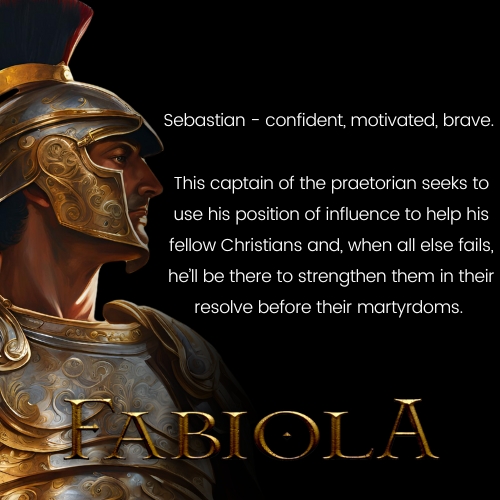
A Roman Patriot — St. Sebastian
One of the clearest examples of balanced patriotism is St. Sebastian.
He was a Roman soldier serving under pagan leadership — in one of the most morally compromised environments in the empire. Yet he loved Rome deeply.
Patriotism is a virtue. A patriot loves the good in his country and works to preserve it — or to restore it.
St. Sebastian does not demonstrate blind nationalism. Neither does he reject Rome in bitterness. He fulfills his duty, honors lawful authority, and lives virtuously.
When the time comes, he sheds his blood — not in rebellion against Rome, but for the Faith and for the conversion of the country he loves.
That same pagan empire would one day become the bustling heart of Christendom.
The Christian Romans did not hate Rome.
They loved her enough to desire her conversion.
Stories like FABIOLA which show characters like this matter today.
If you believe families need films rooted in virtue, history, and courage, consider becoming part of the mission.
From the Christian Romans we can learn that true patriotism:
• Honors rightful authority
• Defends what is good
• Works to rebuild what is broken
• Is rooted in virtue, not fanaticism
Even today, celebrating our country and teaching gratitude for its freedoms builds love for what is good and inspires us to strengthen it.
This is balanced patriotism.
Roman Women Clothing — Status in a Pagan World
Clothing in ancient Rome was not just fashion. It was a statement of status.
To wear Roman dress was to belong to the Roman civilization.
Women typically wore:
• The tunica — a simple, belted undergarment
• The stola — the garment of a married Roman woman, much like head coverings in the regency period.
• The palla — a draped shawl worn outdoors, often covering the head
Fabric, color, and ornamentation varied according to style and tastes, but they also generally showed a woman's status as well.
Wealthy women wore dyed textiles and gold jewelry, while the poorer women wore more simple clothing.
Christian women were no exception to conforming to these societal norms. Modesty is not always being plain, but dressing in a way that does not draw undue attention to oneself or making a display of one's body.
Although they dressed like their fellow country women, the Christian women lived their lives differently.
Their humility, virtue, and courage quietly contradicted the moral decay around them.
Clothing reflects personality.
Our personality is adorned by our virtue.
Virtue transforms civilization.
Behind the Scenes — Our Roman Costume Development
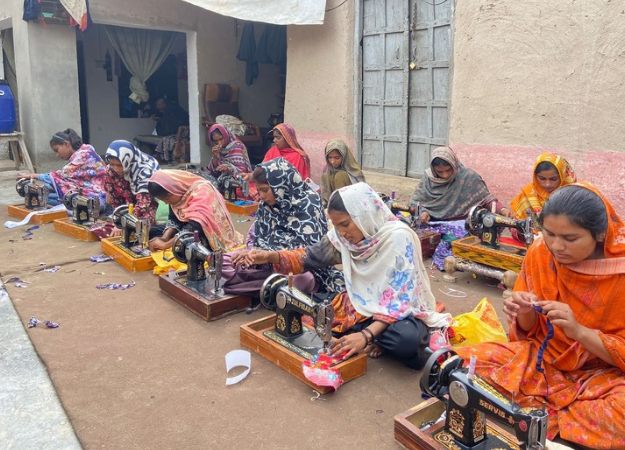
One of our favorite parts about filmmaking is designing and sourcing the costumes. For FABIOLA, we've been very fortunate to be able to hire seamstresses that will be able to custom make each costume. This is not a luxury we have had in the past.
And the best part?
Our costume designers are a charity in Pakistan and we are able to help them free women from slavery by ordering our costumes through them. These are women who are often in debt to Muslim masters and work in their homes as slaves.
Our friends Awais and Aneeta rescue these women, welcome them into their Catholic community, and give them sewing jobs. We are proud to partner with them for the FABIOLA costumes.
We’ve had a wonderful time being practically unrestrained in our dreams for the costumes and it has been a wonderful experience collaborating to bring these dreams to life with the Gospel Outreach in Pakistan.
Building the Roman World — Ongoing Behind the Scenes
This page will continue to grow as production advances.
Here you will find frequent updates regarding:
• Character research
• Costume design
• Historical notes
• Photos from production
• Reflections on virtue and storytelling
Rome was not ultimately changed by raw power.
It was changed by the heroic stand and virtues of the martyrs.
And that is the story we are committed to telling — for families, for history lovers, and for those who believe entertainment should nourish the soul.
Help Us Tell This Story
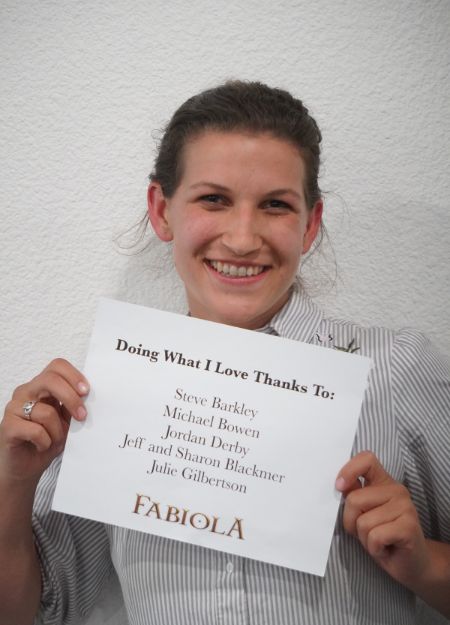
We are building this film one step at a time — through research, costume design, character development, and Catholic storytelling.
If you would like to stand with us in bringing FABIOLA to life, we would be honored to have your support.
Together, we can create entertainment for your family’s soul.

Subscribe To Our FREE Email Newsletter:
Our Mission
We believe storytelling has the power to shape souls. In a world where mainstream media often undermines faith and virtue, we are dedicated to reclaiming the art of filmmaking for Christ and His Church. Our mission is simple yet bold: to populate the movie industry with good, Catholic films that inspire, uplift, and ignite a love for truth and beauty.
Populating the movie industry with good, Catholic films that inspire, uplift, and ignite a love for truth and beauty.
Copyright © 2026. Industrious Family LLC. All rights reserved.
Disclosure: We show products that we think will help you. If you use our links, we may earn ad commissions at no extra cost to you. As an Amazon Associate we earn from qualifying purchases.