Don't miss your chance to invest in 'Fabiola'!
The Fall of the Roman Empire
The Fall of the Roman Empire
Visit our crowd-funding page to help make Catholic movies!
- Home
- Movie Reviews
- Movies About Roman History
- The Fall Of The Roman Empire
The fall of the Roman Empire was necessary for the Church to emerge out of the ashes of Rome as the new and more perfect government. Through God’s providence, what appeared to be collapse became the foundation for a civilization rooted not in power, but in divine truth.
Before continuing to study the fall of the Roman Empire, it is helpful to understand several important facts about Roman civilization.
Unlike the Greeks, who were known for philosophy and abstract thought, the Romans were known more for action and accomplishment. Rome was at its height during Christ’s earthly life. Roman warfare had been mastered to such an extent that defeat in battle was rare.
Rome built extensive roads so travelers could move easily throughout the empire. Aqueducts were also constructed, allowing water to be brought directly into homes within the city. Government authority was organized under one man, the emperor, known as Caesar.
These strengths made Rome powerful—but they also set the stage for a moral collapse when virtue was lost.
“Fiddling While Rome Burns”
Nero Plays a Key Role in the Fall of the Roman Empire
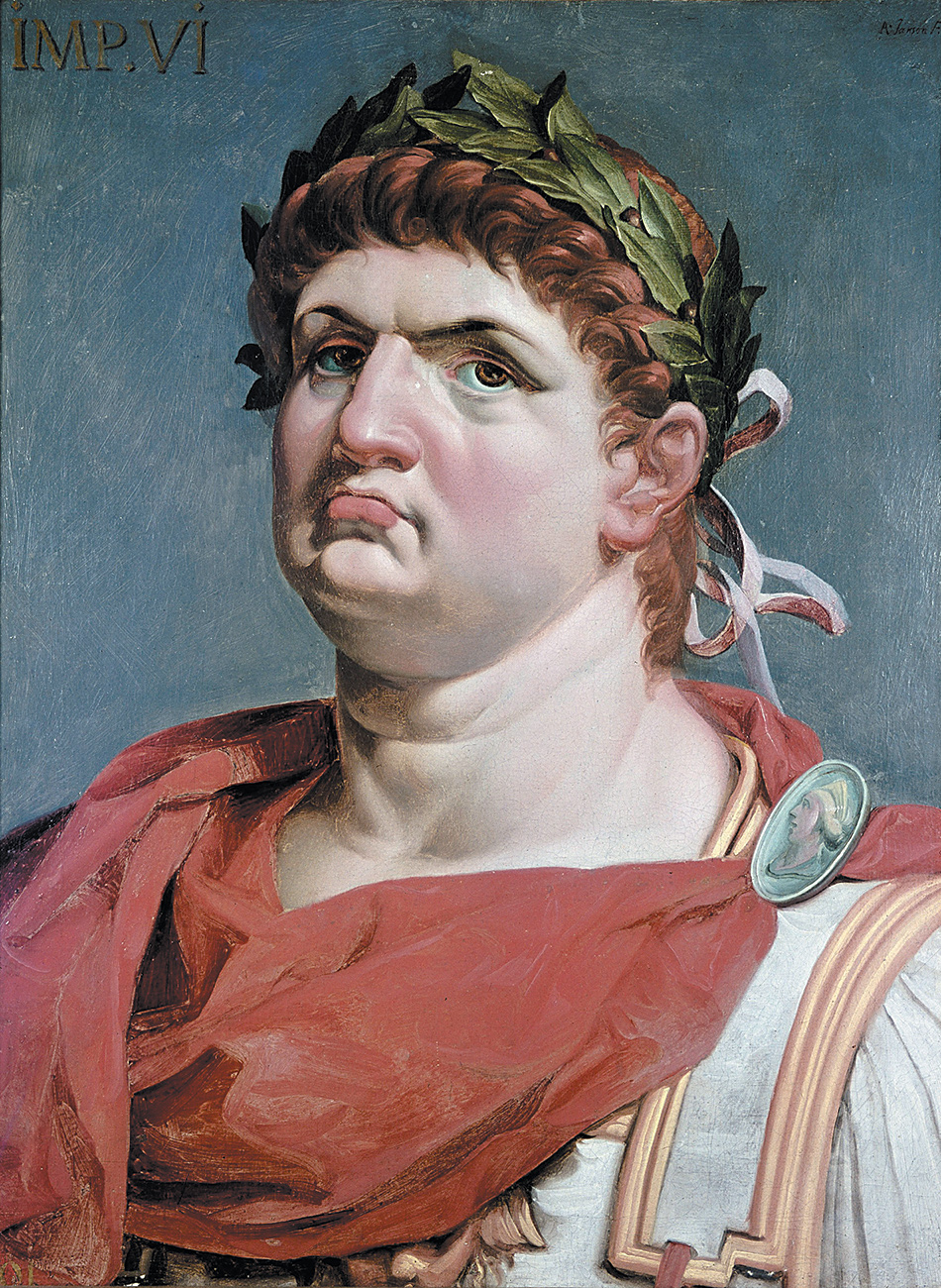
Emperor Nero
“Fiddling While Rome Burns”
Nero Plays a Key Role in the Fall of the Roman Empire
The glory of Rome began to decline during the reign of Emperor Nero in 64 A.D., roughly thirty years after Christ’s death. Nero loved power, and his great wealth came largely from heavy taxation of Roman citizens.
Nero deeply hated Christians. Nero also hated the Christians and lit a fire in the city then blamed them for it. The emperor then built a great circus and killed many Christians in it as a spectacle that was consumed by the masses as a form of recreation and entertainment.
The “Good Emperors” and Moral Decline
The “Good Emperors” and Moral Decline
After Nero, a line of rulers known as the “Good Emperors” governed Rome from 96 to 180 A.D. These emperors sought to restore Rome to her former greatness. While they succeeded in stabilizing parts of the empire, they failed to correct its deeper moral problems.
Despite their administrative skill, these emperors continued to persecute Christians. The last of the “Good Emperors” was Marcus Aurelius. After his death, he was succeeded by his son, Commodus.
Commodus proved insane and reckless in his leadership. Under his rule, productivity declined, taxes increased, and food prices rose. Moral standards deteriorated throughout society. Fewer children were born because they stopped having children or let the ones who were living die.
Entertainment became increasingly violent. Public “games” resembled battles rather than sport. Men were forced to fight wild animals or one another. The gladiators also fought man to man, and all fought to the death. These spectacles reflected the growing spiritual emptiness of Roman life.
Diocletian — The Last of the “Good Emperors”
Diocletian — The Last of the “Good Emperors”
In the ninety years following Commodus, Rome saw nearly twenty emperors. After Emperor Carus, Diocletian rose to power in 284 A.D.
Diocletian might have been remembered as the last of the “Good Emperors” if not for the greatest persecution of Christians occurring during his reign. Despite this, he was a true patriot who loved Rome and sought to preserve the empire.
Diocletian moved his residence to the wealthier eastern part of the empire. Because of the distance, he appointed a partner emperor to govern the West. The Eastern Empire provided goods such as silk, while the West supplied military forces.
From this point forward, the empire was ruled by two emperors. This system remained in place until the rise of Constantine.
"In This Sign You Shall Conquer"
"In This Sign You Shall Conquer"
Constantine and the Triumph of the Cross
Constantine and the Triumph of the Cross
Constantine, an ambitious young leader, succeeded as emperor in the West. His father had ruled Rome, but after his death, Constantine was taken captive by the emperor in the East, who then claimed sole authority over the empire.
Constantine managed to escape while his captor was drunk. At each outpost he secured a fresh horse, literally hamstringing the others to prevent pursuit. This strategy allowed him to gain a sixteen-hour head start.
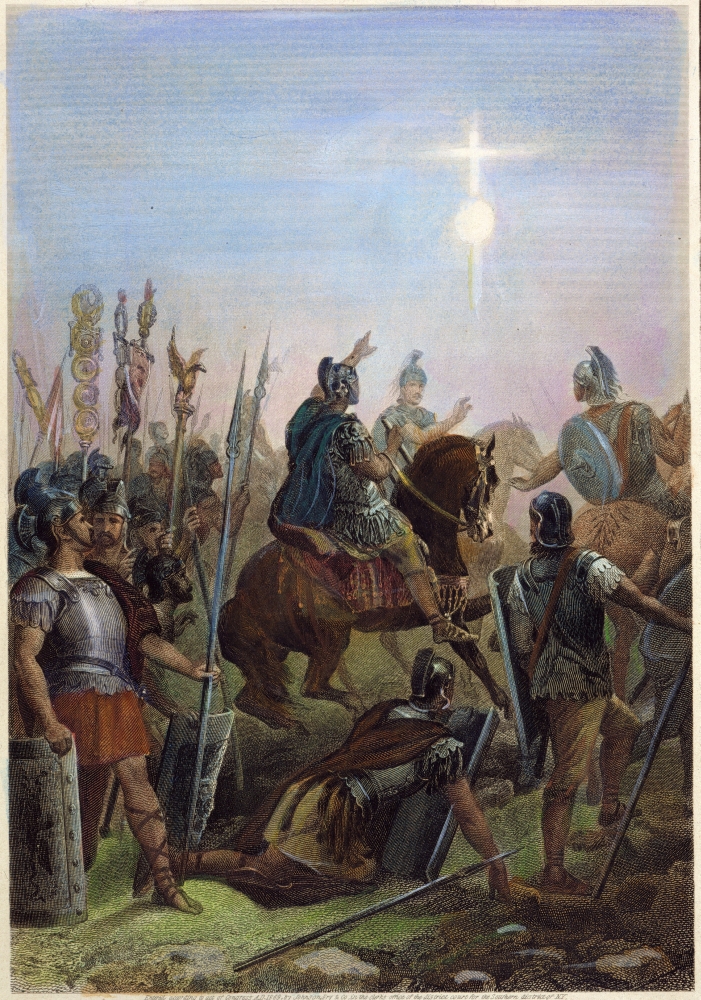
Upon reaching Rome, Constantine prepared to face the false emperor, Maxentius. The night before the battle, Constantine saw a cross in the sky and heard the words, “In this sign you shall conquer.” He ordered his soldiers to place a red cross on their shields.
Constantine won the battle and became emperor of Rome, and later, ruler of the entire empire. He immediately freed the Christians and ended official persecution. For this reason, Constantine is known as the “Father of Christendom.”
His mother was Saint Helena, and before his death, Constantine himself became a Christian.
Through the fall of Rome, God allowed His Church to rise. By supporting Christianity, Constantine helped establish a more perfect and enduring form of governance.
Like Diocletian, Constantine moved the imperial capital to Constantinople. Rome gradually became a spiritual center rather than a political one. The Vatican and several of the minor churches were donations given by Constantine to the Church.
Rome then became the center of an empire that far outreached the influence of the Roman Empire as the Church that was once persecuted preached to the four corners of the globe.
Family-friendly movies that bring Roman history to life.
Why the Fall of Rome Still Matters
Why the Fall of Rome Still Matters
What happens when a civilization falls into moral decline? The fall of the Roman Empire reminds us that military strength and wealth cannot save a society without religious foundations.
This lesson is just as important today as it was in antiquity.
A new feature film inspired by the courage of early Christians.
The Fall of the Roman Empire in Film
The Fall of the Roman Empire in Film
While researching FABIOLA, we watched and reviewed a wide range of films depicting the fall of the Roman Empire. From Fire Over Rome to Gladiator, these stories bring history to life. We have even reviewed animated films.
These films help families understand both the brutality of pagan Rome and the courage of the early Christian martyrs whose blood watered the Faith that transformed the world.
If you are fascinated by Roman history and inspired by stories of valor, we invite you to watch these films—and to consider supporting our current feature film, Fabiola, which tells a powerful story from this pivotal era in Salvation history.
References:
This article was written by Becket Bowen.
Johnson, Rev. George. The Story of the Church. Rockford: Tan Books and Publishers, 1980.
Carroll, Anne W. Christ the King Lord of History. Charlotte, NC: Tan Books and Publishers, 2012.
Help Bring Fabiola to Life

Subscribe To Our FREE Email Newsletter:
Our Mission
We believe storytelling has the power to shape souls. In a world where mainstream media often undermines faith and virtue, we are dedicated to reclaiming the art of filmmaking for Christ and His Church. Our mission is simple yet bold: to populate the movie industry with good, Catholic films that inspire, uplift, and ignite a love for truth and beauty.
Populating the movie industry with good, Catholic films that inspire, uplift, and ignite a love for truth and beauty.