Don't miss your chance to invest in 'Fabiola'!
Visit our crowd-funding page to help make Catholic movies!
- Home
- Merry Anne Bright
- St. Nicholas Day
Christian Traditions of Christmas
St. Nicholas Day
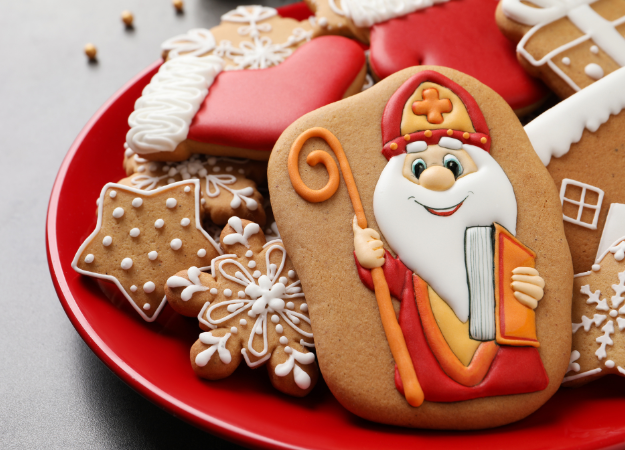
Who St. Nicholas really was — and how his faith in Christ shaped a legacy of generosity that still points us back to Christmas.
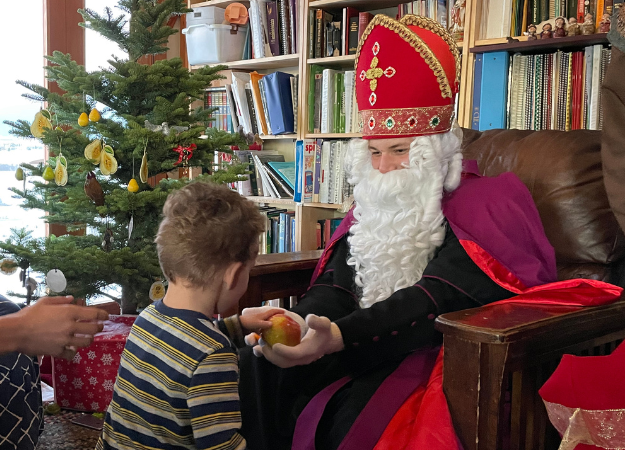
St Nicholas Day holds a special place of importance in Catholic homes, especially those with little children. As the patron saint of youth, St. Nicholas’ visit beautifully emphasizes the spirit of sacrifice and preparation during Advent — making hearts ready for the coming of Christ at Christmas.
What better way to teach children to prepare their hearts for Christ's coming at Christmas than to invite St. Nicholas into your home? His small gifts and encouragement help spread out the excitement of Christmas and keep the focus on Christ.
Who Was St Nicholas?
Who Was St Nicholas?
St Nicholas was a fourth-century bishop known for his deep faith and acts of charity to those in need of both temporal and spiritual aid. A much loved story is of the time that he punched the heretic Arius for obstinately denying the divinity of Christ.
Long before he became associated with Santa Claus, St Nicholas was remembered as a shepherd of souls who showed Christ’s love through generosity and courage.
Sharing his story helps children understand that real joy comes from giving, not from receiving — a lesson that beautifully sets the tone for Advent, a season of self-denial and longing.
Why We Celebrate St Nicholas Day
Why We Celebrate St Nicholas Day
St Nicholas Day offers families a moment to honor St. Nicholas, the patron saint of youth. It also reminds us that Advent is not about rushing forward, but about waiting in joyful expectation.
Many families use this feast day to:
- Emphasize the need for self denial
- Introduce Advent traditions
- Establish a true Catholic home centered on faith
Rather than overwhelming children, the simplicity of this day makes its meaning easier to remember — and easier to repeat year after year.
Simple St Nicholas Day Traditions for Families
Simple St Nicholas Day Traditions for Families
If you cannot arrange for a personal visit from the holy patron of youth himself, a heartfelt note left by St. Nicholas can work just as well. His message might include:
- That he has come from heaven.
- That he is their special patron and is praying for them.
- That he would love to hear how they are preparing their hearts for Christmas.
Children can respond to St. Nicholas by writing letters or even telling him in person about the sacrifices they are making during Advent.
A beloved tradition is the straw box: a way for children to physically offer their good deeds. Each time a child makes a sacrifice — like an act of obedience, sharing, or helping with younger brothers or sisters — they place a piece of "straw" into a manger to make a soft bed for Baby Jesus on Christmas morning.
These small challenges remind children to keep Advent as a true preparation period, growing in love and selflessness.
A festive touch: attach a chain of yellow construction paper to cards made from last year’s Christmas cards. Each time a child makes a sacrifice, he can take a chain off and place it in the crib creating a soft bed of "hay" for Baby Jesus on Christmas morning.
St Nicholas Day as a Gateway to Advent Customs
St Nicholas Day as a Gateway to Advent Customs
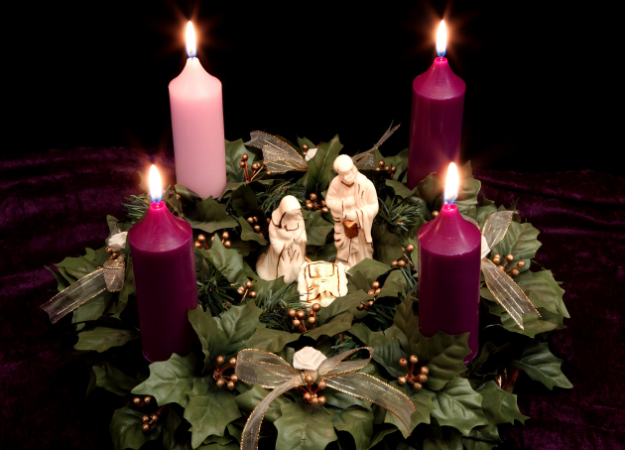
For many families, St Nicholas Day naturally opens the door to Advent traditions that continue throughout December.
After December 6, families continue to deepen practices such as:
- Lighting the Advent wreath each evening
- Reading Scripture accompanied by the symbols of the Jesse Tree
- Marking feast days together on the Church’s calendar
Seen this way, St Nicholas Day becomes the first step in a rhythm — one that teaches children that the Church’s year is filled with meaning, memory, and hope.
Catholics around the world observe the four-week season of Advent to prepare for the feast of Christmas.
Remembering that we "fast before the feast," this season calls for extra penance, prayer, patience, and charity.
The best way to prepare your heart for Christmas is through daily sacrifices, prayer, and tending faithfully to your everyday duties — no small task during this busy, often commercialized holiday.
Staying focused on the heavenly prize helps keep the joy of the season alive. Seen this way, St Nicholas Day becomes a first step on a journey — one that points hearts toward Christ while creating memories children will carry for a lifetime.
Lighting the Advent Wreath Each Evening
One of the most beloved Advent traditions is the Advent wreath, made of evergreens and four candles: three purple and one pink. The evergreens symbolize the eternal life Christ promises, and the wreath’s circle shape reflects God's eternity — He has no beginning and no end.
Each week of Advent, a new candle is lit:
- First Week: The youngest child lights the first purple candle.
- Second Week: The oldest child lights the first and second purple candles.
- Third Week (Gaudete Sunday): The mother lights the pink candle, symbolizing joy.
- Fourth Week: The father lights all four candles.
Prayers accompany the lighting of each candle, drawn from the Gradual of that Sunday's Mass.
A creative idea: make personalized Advent placemats! Using clear contact paper, Christmas cards, stickers, and our printable Advent wreath prayers, design a special mat for each family member. These mats help keep Advent prayers and focus at the center of daily family life.
Reading Scripture accompanied by the symbols of the Jesse Tree
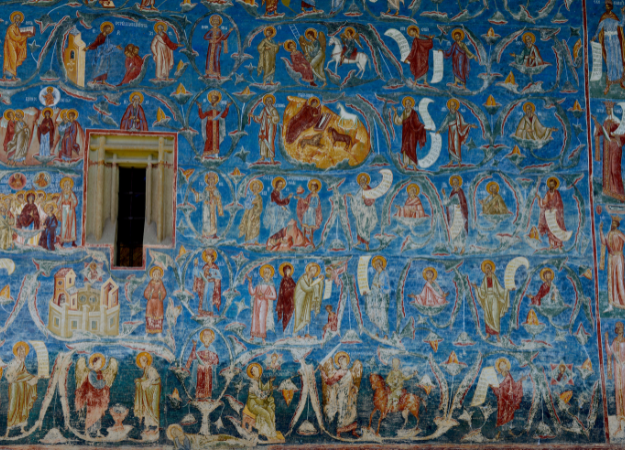
Another beautiful Advent tradition is the Jesse Tree. Think of it as a calendar that traces the lineage of Christ and connects the Old Testament to His birth.
Starting December 1st, a new ornament symbolizing a scripture story is added to the tree, reminding families of God's promises and preparing hearts for the Savior.
The tradition draws inspiration from the prophecy of Isaiah:
"And there shall come forth a rod out of the root of Jesse, and a flower shall rise up out of his root." (Isaiah 11:1)
The Jesse Tree offers a daily reminder that Christmas is about the fulfillment of God's promise.
Our Lady and the Feast of the Immaculate Conception
Our Lady and the Feast of the Immaculate Conception
Just two days after St Nicholas Day, the Church celebrates the Feast of the Immaculate Conception on December 8 — a Marian feast that plays a central role in Advent.
This feast is a wonderful opportunity to form your children's interior life and celebrate the gift of Our Lady who was conceived without original sin. Through a special grace of God, Mary was preserved from all stain of sin, making her a fitting vessel to bring Our Lord into the world.
Honoring Our Lady during this time helps families understand that Advent is not only about waiting, but about preparing the heart, just as Mary did. Many families mark this feast day with:
- Special prayers to Our Lady
- Decorating gingerbread houses and artwork
- A festive party or meal
Together, St Nicholas Day and the Immaculate Conception help place Advent firmly within the life of the Church — centered on patience, humility, and joyful expectation.

Special prayers to Our Lady
Special prayers to Our Lady
Start the day by going to Mass and praying the Rosary as a family. If you can, visit a shrine or a grotto dedicated to Our Lady.
Within your home, renew each family member’s consecration to the Immaculate Heart of Mary. Take some time to teach your children about original sin, the effects of baptism, and the importance of striving to keep their baptismal innocence throughout their lives.
Consecration To The Immaculate Heart of Blessed Virgin Mary
Queen of Heaven and earth, to your Immaculate Heart, the channel of all graces, we consecrate our children, (here list names) whom we have received from God's goodness.
We offer them to you, that you may present them to your Divine Son, that you may take them under your loving maternal protection, that you may preserve them from dangers, that you may keep them from all sin, that you may make them grow in piety and in all virtue, so that they may always be worthy to call themselves your children.
May they grow daily in wisdom and grace, may they go through life having you always as their refuge and their Mother.
May all virtue shine in them and may they never offend your maternal heart.
May the Eternal Father look upon them with delight and see in them a ray and reflection of your Immaculate Beauty.
As today they gladden our home, so may they one day gladden the Eternal Home, which we pray will be theirs.
Amen.
Decorating Gingerbread Houses and Artwork
Decorating Gingerbread Houses and Artwork

The tradition of baking gingerbread cookies or constructing gingerbread houses fits beautifully with this feast.
The spices used—ginger, cinnamon, cloves, and vanilla—fill the house with the odor of sweetness, a scriptural image often applied to Our Lady.
In the Canticles of Canticles, phrases like "odor of spices" and "sweet ointments" have been seen as foreshadowing the purity and beauty of Mary.
The sweet decorations on a gingerbread house—candy drops, gumdrops, and icing—can remind us of the sweetness of a life lived in grace, the innocence of baptism, and the eternal joy that awaits in Heaven.
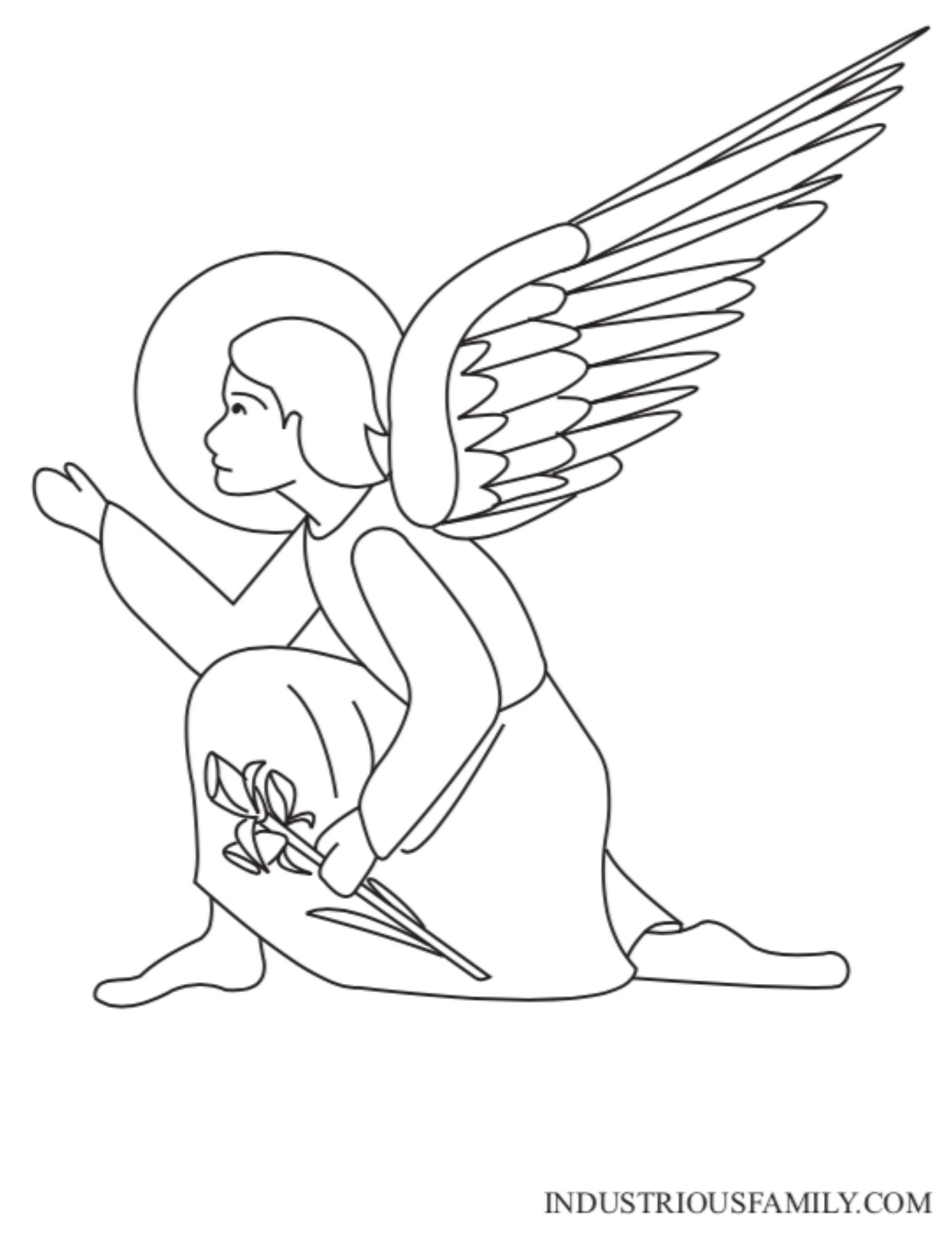
If some of the children are done before the others, you can entertain them with coloring pages of December saints. Print a free St Adelaide coloring page and angel coloring pages here!
Tip: Consider leaving a gingerbread house kit on St Nicholas Day so the children can build it in anticipation of the Feast of the Immaculate Conception, two days later!

A Festive Candy-Themed Party or Meal
A Festive Candy-Themed Party or Meal
This day is about honoring Our Lady—and what better way to do that than with a sweet, joyful celebration that mirrors her purity and sweetness? A candy-themed party is a festive and meaningful way to capture the spirit of this feast!
A candy party adds an extra layer of joy to this Marian celebration, especially for children! Here’s how to throw a candy-themed party centered on honoring Our Lady.
Decorating Tips
Pizza is super easy to serve and clean up for large gatherings. You can serve Christmas cookies (including gingerbread men) but the focus of the party should be building gingerbread houses. You can also use peppermint swirl decorations, candy garlands, and faux snow to give your space a whimsical, sugary touch—all pointing back to the theme of Mary's sweet purity.
By combining the tradition of honoring Our Lady with a candy-themed celebration, you create a day that's both fun and filled with rich Catholic meaning. The sweetness of the day mirrors the purity of Our Lady and helps children build beautiful, lasting memories centered on faith, family, and joy.
Let the fragrance of gingerbread, the sparkle of candy, and the innocence of your children’s laughter be a fragrant offering to Our Queen on her special day!
Why These Traditions Matter Today More Than Ever
Why These Traditions Matter Today More Than Ever
In a culture that rushes toward Christmas, St Nicholas Day invites families to pause. Through saints, feast days, and devotions, children discover that there are real-life holy people who they can learn from and become friends with. Friends who will help them as they navigate life's journey.
St Nicholas Day reminds us that charity is loving God and our neighbor for His sake.
Our Lady’s feast reminds us that holiness begins in a humble heart.
Advent teaches us to wait for the coming of Christ in joyful expectation.
An Invitation to Continue the Story
An Invitation to Continue the Story
Stories have always been one of the most powerful ways families pass on the Faith. As Advent unfolds, storytelling helps children connect tradition with meaning.
Merry Anne Bright, our original Christmas short film, continues this spirit of discovering the true meaning of Christmas — offering a way to reflect during the Advent and Christmas seasons.
What Advent traditions does your family treasure most?
How do you celebrate St Nicholas Day or Our Lady’s feast in your home?

Subscribe To Our FREE Email Newsletter:
Our Mission
We believe storytelling has the power to shape souls. In a world where mainstream media often undermines faith and virtue, we are dedicated to reclaiming the art of filmmaking for Christ and His Church. Our mission is simple yet bold: to populate the movie industry with good, Catholic films that inspire, uplift, and ignite a love for truth and beauty.
Populating the movie industry with good, Catholic films that inspire, uplift, and ignite a love for truth and beauty.
Subscribe to our Newsletter and Get Our Free Guide!

Stay up-to-date with Industrious Family productions, streaming, gifts and movie reviews delivered straight to your inbox every Thursday!
Copyright © 2026. Industrious Family LLC. All rights reserved.
Disclosure: We show products that we think will help you. If you use our links, we may earn ad commissions at no extra cost to you. As an Amazon Associate we earn from qualifying purchases.